| Although the region is dominated by the historic cathedral city of Exeter, capital of the southwest, it incorporates secluded villages, sweeping river valleys, tree-lined hilltops and a not-to-be-missed seaside experience. |
|
|
Its entire Channel coastline, from Orcombe Point, near Exmouth, to the county's border with Dorset, is part of the 95-mile 'Jurassic Coast', one of the UK's World Heritage sites. |
|
Beautiful and awe-inspiring, its red sandstone cliffs have yielded many fossils and dinosaur remains. |
| Ladram and Sidmouth have important sites dating to the Triassic period while the area around Lyme Regis, on the Dorset border, was where the pioneer palaeontologist Mary Anning found the first remains of the giant flying reptile Ichthyosaurus. |
|
![]() Ladram Bay - © Tony Howell |
The great cliffs are not just the haunts of fossils.
Hereabouts the climate is so mild that palm trees flourish - as do holiday activities. |
![]() Jurassic Coast - © Tony Howell |
| The resort of Sidmouth, for example, has almost 500 listed buildings as well as a fine, mile-long main beach and a second beach known as Jacob's Ladder. |
![]() Sidmouth Main Beach - © Sidmouth Town Council |
![]() Beer Exeter Photo: Peter Watkins CCL |
Old fishing villages such as Beer lie in the sheltered coves that proved perfect hideaways for bands of old-fashioned smugglers; Beer Head soars to over 400 feet and has the most westerly chalk cliffs on the Channel coast. |
![]() Exmouth Photo: Andy Peacock CCL |
The former Roman port of Exmouth was one of the first seaside resorts to be made popular in the late 18th century, playing host to luminaries like Lord Nelson and the Romantic poet Lord Byron. |
| Most of inland east Devon is so naturally beautiful it is divided into two areas of outstanding natural beauty, including the Blackdown Hills in the northeast. |
![]() Blackdown Hills Exeter Photo: Derek Harper CCL |
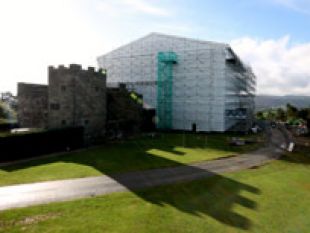
| Tiverton boasts the remains of a 14th century castle and a 15th century church while the poet Samuel Taylor Coleridge (1772-1834) was born at picturesque Otter St Mary. Historic Honiton was famous for lace-making and provided the material for Queen Victoria's wedding veil. |
![]() Tiverton Castle Exeter Photo: Humphrey Bolton CCL |
![]() City Walls Exeter Photo: Derek Harper CCL |
The city of Exeter was the creation of the Celtic Dumnonii tribe who called it Iscka. The Romans made it their most westerly stronghold and surrounded it with a defensive wall. Later the city was transformed by Alfred the Great and became one of the largest woollen towns in England, although much of it had to be rebuilt after bombing raids destroyed its ancient centre in the Second World War. |
| One of the buildings that miraculously escaped severe damage was the Norman cathedral of St Peter, a 13th century Gothic masterpiece encircled by a diamond-shaped close. The cathedral has a vaulted ceiling with the longest unbroken span in the world and boasts some of the finest stained glass in England as well as a 60ft Bishop's Throne. Exeter's 14th century Guildhall is one of Britain's oldest municipal buildings while its old Ship Inn is said to have been Sir Francis Drake's favourite drinking place. |
![]() Cathedral Nave - © Exeter Cathedral |
Exeter's Underground Passages - © Mike Alsford |
The city's most remarkable tourist attraction is a series of underground passages built to bring water to the townspeople in the 14th Century.
They're open for guided tours – but not for those who suffer from a fear of enclosed spaces. |
| East Devon's strangest curio is a bizarre Gothic 'folly' named 'A La Ronde' that was built with 16 sides by wealthy cousins Jane and Mary Parminster in the 1790s. Inspired by a Grand Tour of Europe, they may have based their idea on an Italian basilica. |
![]() A La Ronde Exeter Photo: Chris J Dixon CCL |
Hotels, Guest Houses, Bed and Breakfast, etc.
Self
Catering Cottages, Villas, Apartments, Static Caravans, Holiday Parks, Lodges, etc.
Camping and Touring Caravan Sites
Boating and Sailing Holidays