Bedfordshire
Let us help you plan your ideal vacation in Bedfordshire...
Bedfordshire is England's second smallest county and, in contrast with its illustrious near-neighbour London, largely consists of rolling green fields.
Mostly low lying, its economy relies heavily on agriculture and market gardening, yet here are great houses, scores of thatched cottages, old-world villages and even tigers! Situated northwest of the capital city in eastern England, the county used to be part of the kingdom of the ancient British tribe known as the Cantvellauni.
Later, the Romans came, saw and conquered but were eventually replaced by the Anglo Saxons and by the end of the sixth century the region was part of the Kingdom of Mercia. While the county played an important role during the reign of King Alfred, Bedford itself was sacked and burned in the year 1010 AD by the Danes.
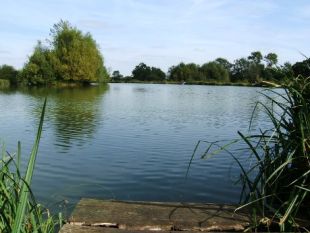
Geologically, the county can be divided into distinct parts. In the north is a maze of rolling pastures and farms in the glinting valley of the majestic River Great Ouse, a wide waterway joined by numerous tributaries. Here are sublime water meadows lined with willow, alder and hordes of canny fishermen.
The area was left virtually undisturbed by the Romans and their subsequent followers, though the Vikings navigated the Ouse and built a harbour and docks at Willington.
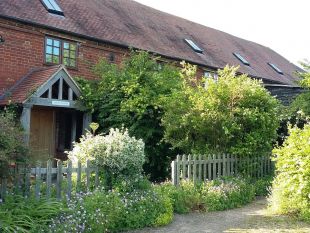
Deposits of yellow-brown clay create the perfect underbody for cow-munching grasslands. These farm-laden northern reaches are characterised by quietly-spoken villages with thatched houses, traditional village greens and ageing, stone-spired churches. Roxton boasts rush-roofed chapel while Bushmead has the remains of royal stables and an Augustinian priory. The clay proved to be ideal for brick-making, an industry which dominated the county for many years. Water-filled pits (from which the clay was dug) are abundant in some areas and provide havens for wildlife.
The picturesque village of Cardington has become a centre for hot-air ballooning and is still dominated by hangars used to build the ill-fated R101 airship.
Instead of clay and hot air, the south of the county is a place of chalk, boasting the stunning Chiltern Hills and glider-filled Dunstable Downs. This is essentially an area of farms and market gardens growing a constellation of fruit and vegetables.
Fruit growing came of age here in the 19th century with the coming of the Victorian plant pioneer Thomas Laxton. The redoubtable Mr Laxton and his descendants developed many varieties of apples ("Lord Lambourne", "Laxton's Superb") as well as plums, pears, gooseberries, raspberries, currants and strawberries.
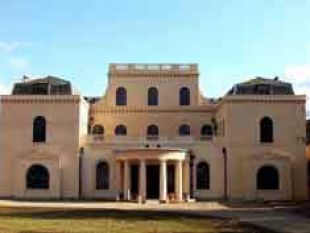
There are a number of great houses in the county but the most prominent is 18th century Woburn Abbey, which lies atop a sandstone ridge. The ancestral seat of the Dukes of Bedford, it was originally a medieval abbey and contains paintings by the likes of Canaletto and Rembrandt.
The surrounding 3,000-acre Woburn Park was used by the 11th Duke to save the rare Père David's deer from extinction in the 20th century. Other species of deer have since been drafted in. After the Second World War the 13th Duke was the first aristo to open his stately pile to the public before he invented Woburn Safari Park - the largest drive-through wildlife reserve in Britain.
Nearby stands Abbot's Oak. It was from this noble tree that the Abbot of Woburn was hanged on the orders of Henry VIII in 1537.
Another memorable house is Luton Hoo, south east of Luton. Built by Robert Adam in the 18th century, it was landscaped by the great 'Capability' Brown.
Most of Bedfordshire's population is concentrated in the towns of Luton and Bedford. Luton is famous as home for Vauxhall Motors and "Bedford" was the name given to the range of commercial vehicles they built.
The area's most famous historical figure was the nonconformist preacher John Bunyan (1628-1688) who was born at Harrowden, near Bedford, and began the allegorical "Pilgrim's Progress" while incarcerated in Bedford jail during a period of severe religious persecution. A slab marks the site of the prison but the town has other Bunyan memorials, including a museum, a statue in front of St Peter's Church and a famous meeting house.
Bedford has a fine five-arched 19th century bridge over the River Great Ouse and a number of old churches. St Paul's, for example, dates to the 12th century and has a 15th century pulpit from which John Wesley preached.
Curiously, the county has seen few battles or major upheavals in modern times and beyond the main centres of commerce and development has retained a quaint, rustic air.
Read More